About me
Christopher Harrington
Accessibility Advocate | Assistive Technology Trainer | Mentor | Technology Enthusiast | Lifelong Learner
My story
Welcome
Hello, and welcome to my corner of the internet!
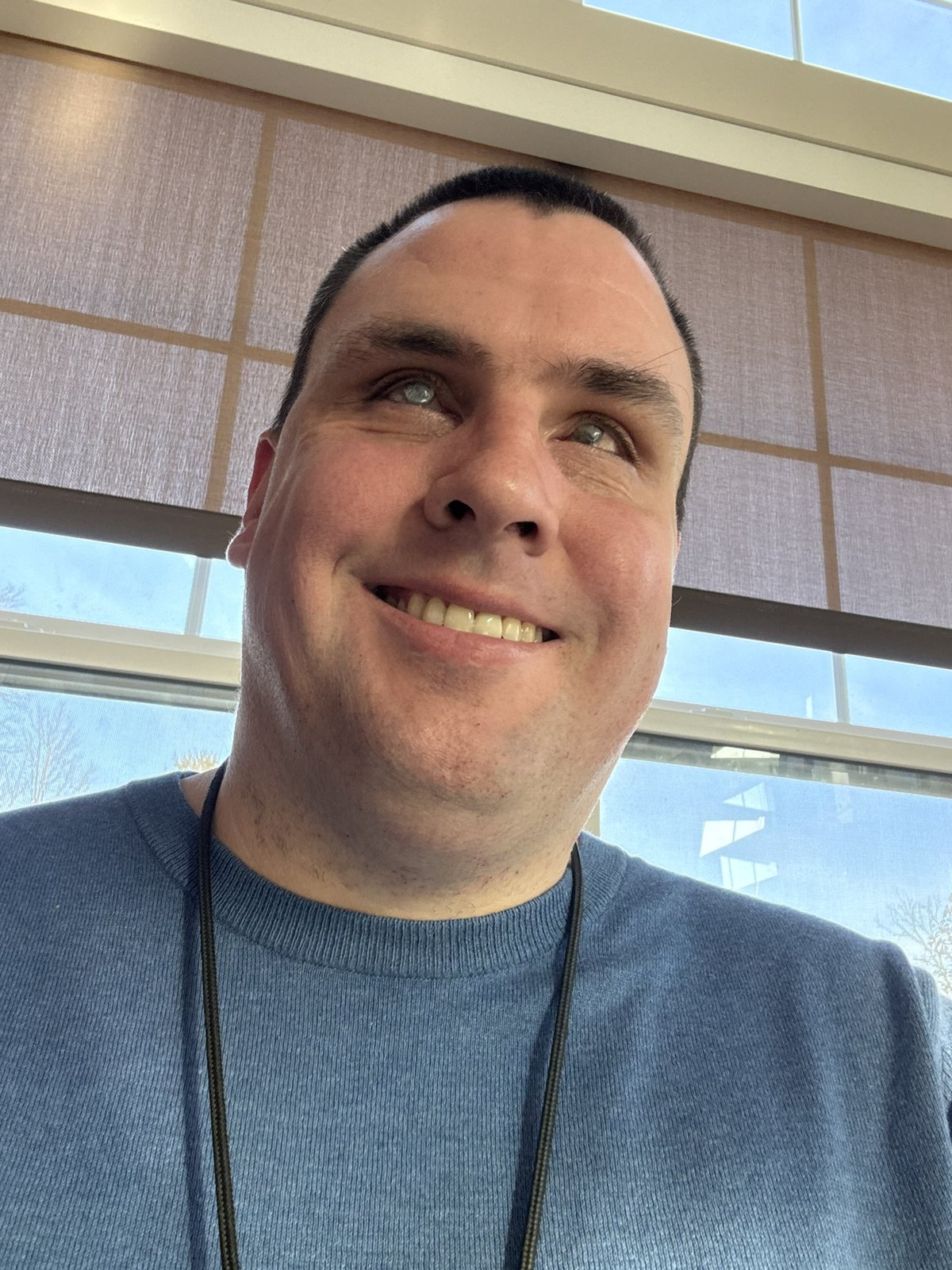
My name is Christopher Harrington, but most people just call me Chris. I'm an accessibility advocate, assistive technology trainer, mentor, and lifelong technology enthusiast in Columbus, Ohio, by way of the hills of West Virginia. I was born blind due to retinopathy of prematurity, and while blindness has shaped my interests and my career, it has never defined the limits of what I'm willing to try.
One thing worth saying up front: this website is a hobby and a passion project, not a professional portfolio. It's where I share what I'm curious about, document the things I'm building, and hopefully connect with people who care about the same things I do.
Where I Come From
I grew up in two very different places: the hills of rural West Virginia and the suburbs of central Ohio. I think I'm a better person for having had both.
The West Virginia part of my childhood was spent well off the beaten path, up a winding back road in the hills. It was the kind of place where the pavement gives way to gravel, the hollows fill with fog in the morning, and houses are measured in acres apart rather than feet. Getting to town for school or groceries was a real trip. At night it was quiet enough to hear the creek, and dark enough that the porch light was the only light around. It's where I learned to find my way by sound and memory, to be comfortable with my own company, and to appreciate people who will drop everything to help a neighbor.
Central Ohio was the other half of the story, and it's about as different from a West Virginia hollow as you can get: flat, orderly, and busy, with sidewalks, bus routes, and a big city a short drive away. That meant more opportunity and more independence for a blind kid, and I took full advantage of it. I graduated from Westerville Central High School in 2009, and central Ohio has been home ever since.
I started college with information technology coursework at Columbus State Community College, then went on to Ohio Dominican University, where I earned a Bachelor of Science in Business Administration with a concentration in insurance and risk management. I made the Dean's List several semesters running, received a scholarship from the Columbus CPCU chapter, and was chosen as the student speaker at my 2019 commencement, which remains one of the prouder moments of my life.
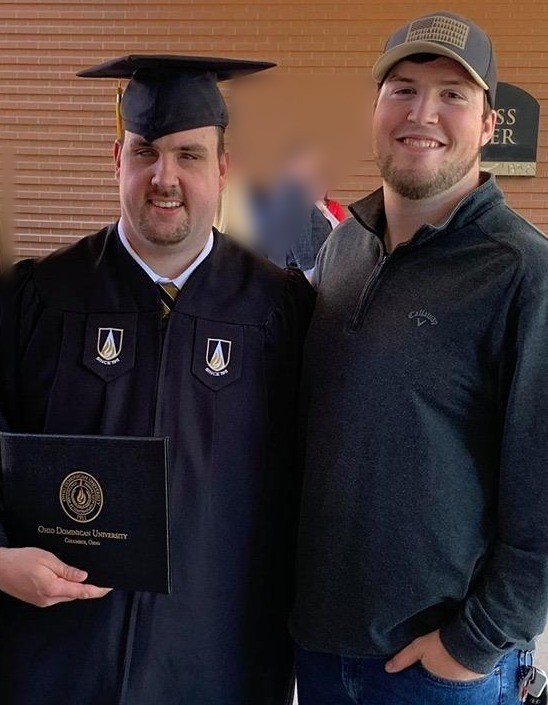
The business degree might seem like an odd fit for someone who spends his days on screen readers, but I lean on it constantly, whether I'm sizing up a product, a project, or a business idea. And I've never believed learning stops at graduation. Most of what I know best, I learned by doing.
What I Do
I've spent well over a decade working with people who are blind or visually impaired, and that work has taken a few different shapes.
It started with summers as a camp counselor and technology facilitator at a residential school for students who are deaf or blind, where I helped supervise a few dozen campers and trained students and staff on the latest technology, including rolling out a fleet of iPads. Those summers showed me what the right tool, taught the right way, can do for a young person, and I've never forgotten it.
From there I spent several years as a specialist for a major consumer technology retailer, where I became the go-to person for accessibility. I taught customers to use VoiceOver and the other built-in accessibility features on their phones, tablets, and computers, and I earned recognition as a Certified Apple Teacher along the way. I also spent a stretch in the insurance industry after college, which sharpened my customer service skills and taught me how large organizations really work.
For the past several years, I've worked at a school for the blind, first supporting assistive technology and substitute teaching, and now in the residential program, where I help students build daily living skills, social and emotional skills, and the confidence to be independent, responsible young adults.
Alongside that, I work with a vocational rehabilitation provider as an assistive technology trainer and assessment specialist. I sit down with adults who are blind or visually impaired, learn what they want to accomplish, figure out which tools will get them there, build an individualized training plan, and follow their progress. The tools include JAWS, ZoomText, Fusion, VoiceOver, refreshable braille displays, Microsoft 365, OCR, smart glasses, and increasingly AI-powered tools for understanding visual information. I earned my JAWS certification in 2025 and keep adding to that knowledge every year.
What I bring to all of this is a combination that's rarer than it should be: I train people on assistive technology professionally, and I depend on it myself every single day. When someone is learning a screen reader for the first time, I've been exactly where they are. That makes it easier to connect, to anticipate the frustrations, and to explain things in a way that actually lands. I'd rather help someone understand how a system works than teach them which buttons to press, because understanding is what lets people solve the next problem on their own.
I've also come to care a great deal about leadership and mentorship. Helping someone else become capable and confident, whether that's a student finding their footing or a colleague learning assistive technology for the first time, is one of the most satisfying things I know how to do. The skills I value most aren't on any certificate: communication, patience, adaptability, and the willingness to try a different approach when the first one doesn't work.
How I Think About Accessibility
Accessibility is both my profession and my passion. As someone who has been blind my whole life, I've felt firsthand how thoughtfully designed technology opens doors and how careless design slams them shut.
I believe accessibility belongs at the beginning of the design process, not bolted on at the end, and that it rarely requires specialized equipment. More often, it means making an existing product work properly with the tools people already use: clear information, meaningful controls, keyboard navigation, and reliable screen reader support. Those principles help far more people than just those of us with disabilities.
I'm especially drawn to the products that have traditionally been off-limits to blind users: audio equipment, household appliances, smart home devices, and specialized software. Figuring out how to make those usable is some of the most satisfying work I know.
What I Build
I don't come from a traditional programming background, but AI-assisted development has changed what's possible for someone like me, and I've jumped in with both feet. I'm most interested in software that solves accessibility problems mainstream developers overlook.
Smart home technology is one of my biggest obsessions. I run Home Assistant alongside Apple Home, Alexa, Philips Hue, Sonos, SwitchBot, and more, and what fascinates me is making it all work together intelligently: spoken announcements throughout the house, lights that respond to the door lock, and security cameras that describe what they see using AI, which tells a blind person far more than a motion alert ever could. I enjoy the networking and infrastructure side just as much as the automations.
I treat AI as a powerful tool whose output still needs a critical eye, and I take security, privacy, and real-world usability seriously in anything I build. For me, the most exciting thing about AI is how much it shrinks the gap between having an idea and being able to try it.
Life Beyond the Keyboard
Music has been part of my life for years. I'm a longtime guitar player with a soft spot for country and contemporary worship music, and I love the character of different instruments and amplifiers, from a Martin acoustic to a Telecaster's twang. Running live sound at my church pulled me into audio engineering, and that interest spills over into home theater, speakers, and headphones.
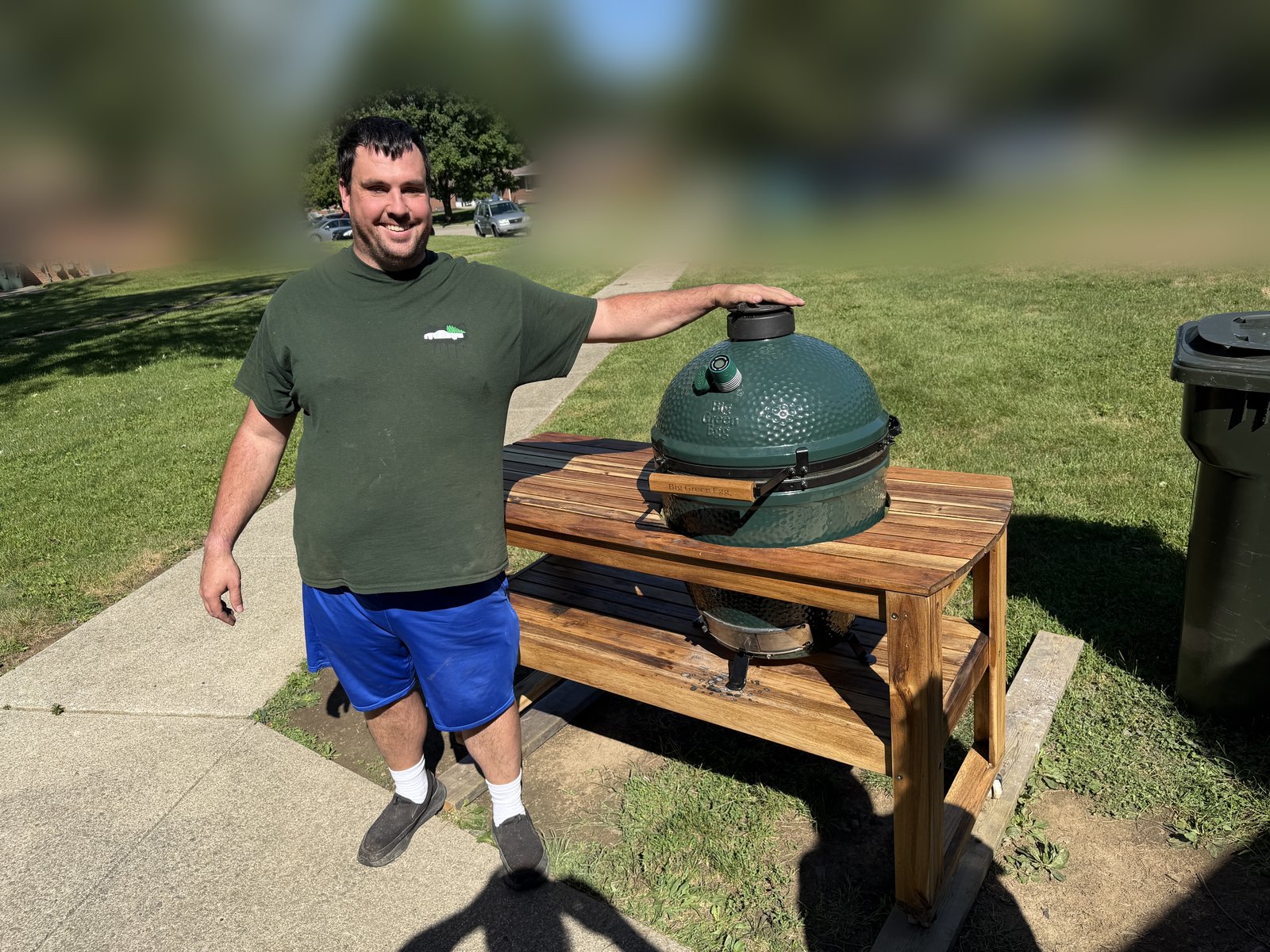
Outdoor cooking is one of my favorite hobbies. I own two Large Big Green Eggs and have put brisket, pork shoulder, steak, turkey, and rotisserie chicken through them, and I enjoy the science of it as much as the eating: airflow, temperature control, smoke, and the wireless thermometers that help me manage all of it. I'm also a specialty coffee nerd who tinkers with espresso gear, grinders, and brew ratios, and who pays close attention to which coffee makers a blind person can actually operate.
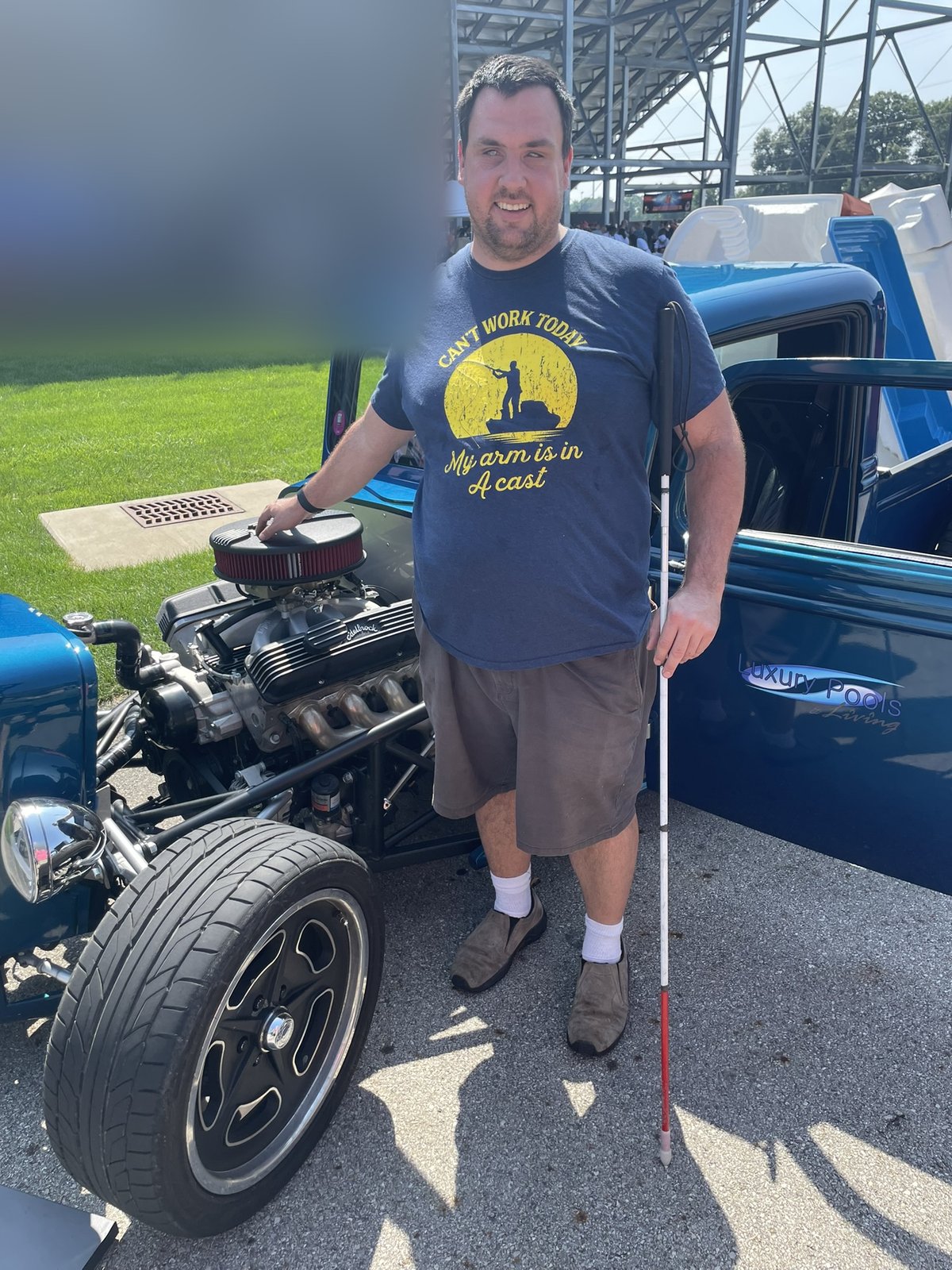
I like working with my hands. My ongoing project is a 1996 Chevrolet S-10 pickup, and I've spent plenty of time on its maintenance, electrical upgrades, and audio system. Being blind means approaching some physical work differently, but I've found that most tasks become approachable once they're broken into clear steps and you have the right techniques and help. I'm a firm believer in learning a new skill rather than assuming something is beyond me.
When I'm not building or fixing something, I'm usually listening to an audiobook. I favor adventure, westerns, thrillers, and science fiction and fantasy, with Louis L'Amour, Robert Crais, and the Dungeon Crawler Carl series among my favorites.
Underneath all of it is a particular view of independence. It doesn't mean refusing help or doing everything the way a sighted person would. It means having the knowledge, options, and confidence to make your own choices and stay in control of your own projects. Many of the barriers blind people face come from assumptions about what we can't do, and I want the students and adults I work with to learn to challenge those assumptions for themselves.
About This Website
ChristopherHarrington.net is a personal hobby. I built it in my spare time, with a lot of help from AI development tools, partly to share my projects and partly because building it was a project in itself. Learning how hosting works, how to keep a site secure, and how to make every page behave properly with a screen reader has been as much fun as anything I've published here.
The projects I share here, such as my Accessible Home overlay for Home Assistant and the KeyStride typing tutor, exist because I wanted them to. Some I give away. Others are being built toward a more polished, supported release, and I'm open to offering software like that for purchase down the road when it's ready. Either way, every project starts with a problem I ran into myself and a conviction that blind users deserve tools that just work.
Everything here was built with accessibility as the first requirement. If you use a screen reader, magnification, or keyboard-only navigation and something doesn't work the way it should, I'd like to hear about it. There's a contact link at the bottom of every page.
A Final Thought
If there's one thread running through all of this, it's curiosity. I'm not satisfied being told something can't be done just because it hasn't been done before. Some days that means teaching someone to navigate Windows with JAWS. Other days it's troubleshooting a Home Assistant integration, working on the truck, practicing guitar, or trying to perfect a brisket. To me, those aren't separate things. They're all problem-solving, creativity, and the satisfaction of learning something new.
Whether you're here for accessibility, assistive technology, software, smart homes, music, or something else entirely, I'm glad you stopped by.
Thanks for visiting, and welcome to my world.
— Chris